

11/3/2017
Reed Hollinshead
ITD Communication
208-334-8881
reed.hollinshead@itd.idaho.gov
ITD southeast Idaho office, town partner to put US-89 on Road Diet and slow speeders
POCATELLO - Drivers speeding through the small town of Paris, Idaho were raising safety concerns, so the Idaho Transportation Department collaborated with city leaders to come up with a unique solution -- a Road Diet.
US-89 is a state highway that also serves as the small southeastern Idaho town's main street. Because Highway 89 is on the State Highway System, ITD has responsibility for it.
Mayor Brent Lewis contacted the ITD District 5 (southeastern Idaho) Traffic section Sept. 25. Because ITD had just chip sealed and fog coated US-89, it was an opportune time.
District 5 Traffic Engineer Corey Krantz decided to employ a Road Diet to solve the issue. The Federal Highway Administration (FHWA) defines the concept as the practice of removing travel lanes from a roadway and using the space for other uses and travel modes.

The most common Road Diet is to convert an undivided four-lane
roadway to a three-lane undivided roadway made up of two through lanes
and a center two-way, left-turn lane. See before-and-after Road Diet diagram.

The reduction of lanes allows the roadway section to be reallocated for other uses such as bike lanes, pedestrian refuge islands, transit uses, or parking.
According to FHWA, studies show that Road Diets result in a 25% reduction in travel speed. Lane-elimination projects also generally reduce the severity of crashes.
The road was re-striped to accommodate 11-foot-wide travel lanes, 6-foot-wide
bike lanes, and 8.5-foot-wide parking slots, with 150-foot-long transitions at the
ends. See photo of new US-89 road section.
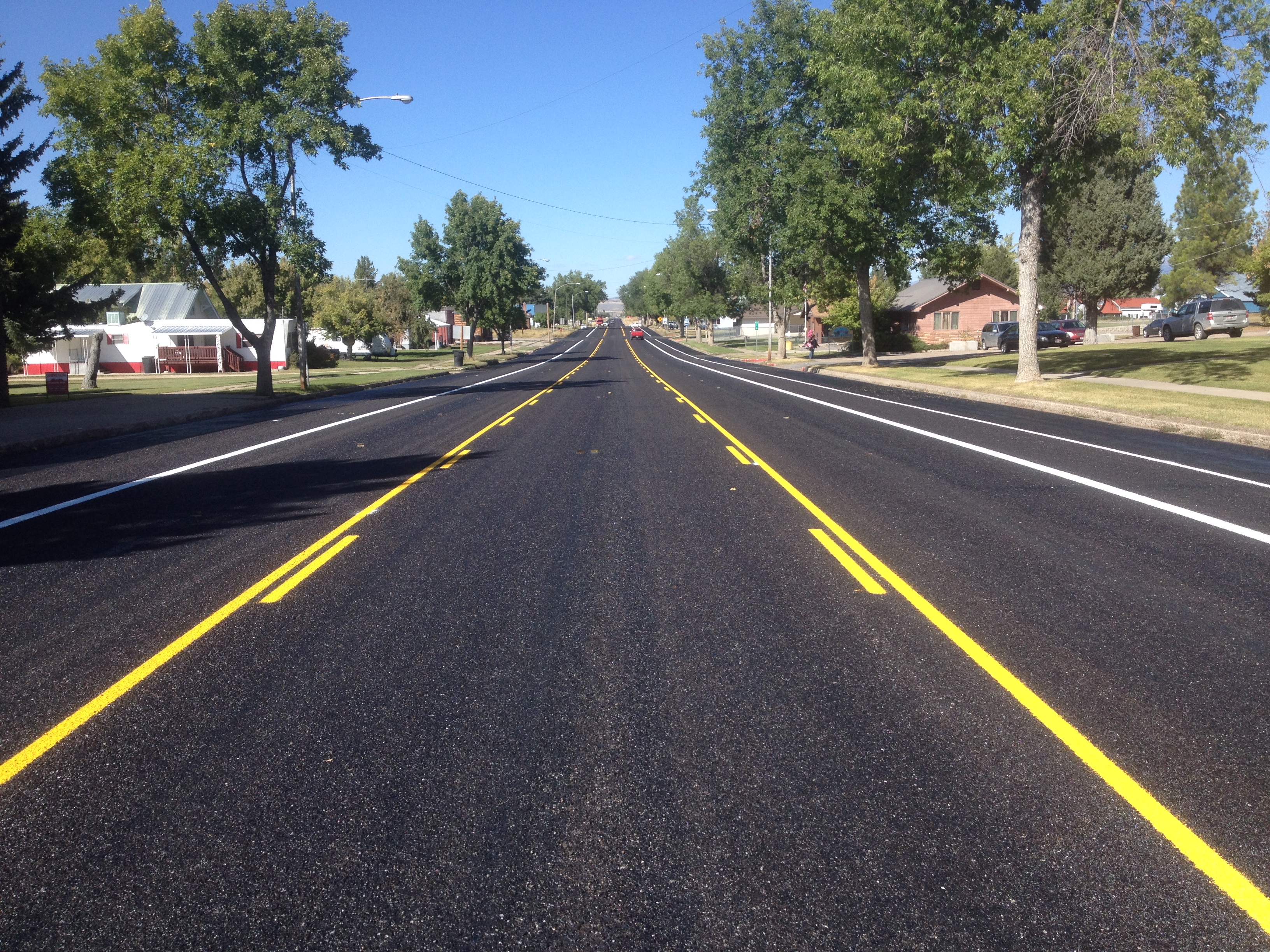
Mayor Lewis is happy with the results. "It looks great, and I've heard many positive comments from citizens. Most of the year-round residents really like it. Our City Council liked it. Mayors from other towns have said they view it as a safety improvement. I have talked to all law enforcement officers and asked for their comments, and what they observe with regard to the change."
"It has definitely helped from a safety standpoint," said Idaho State Police officer Chris Clausing, a resident of Paris. Clausing, a father of four who has patrolled Paris for the past two years, has seen egregious speeding first-hand.
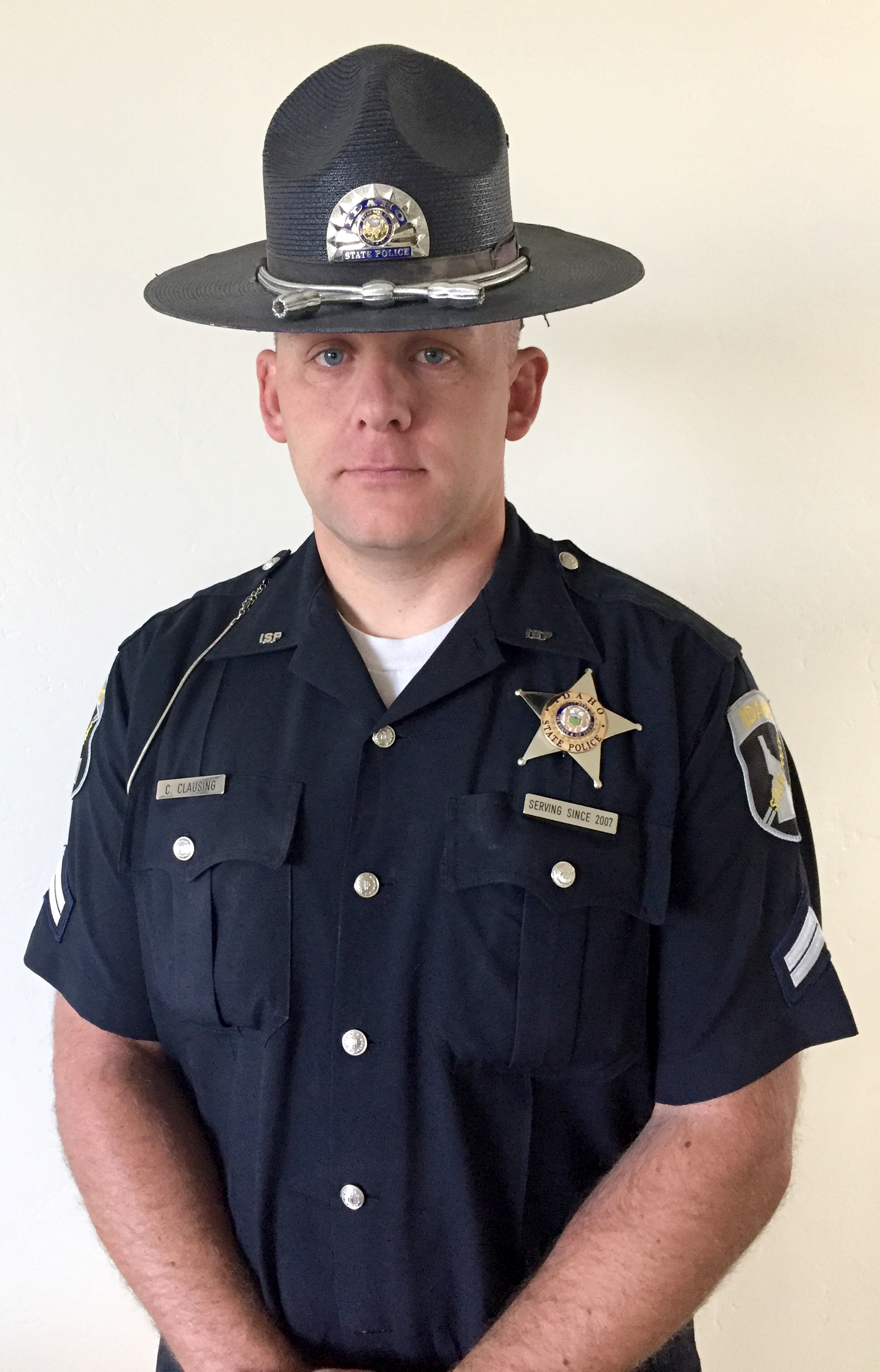
"I've stopped people for going 60 mph and 70 mph through town, and ISP deputies have caught someone doing 80 mph before. The speed limit is 35 mph transitioning to 25, so that is more than excessive."
"Speeds have definitely dropped, and the biggest benefit is safety for the kids. There's more of a buffer now between them and the highway lanes. Before, if kids were playing ball and a ball made it out of the front yard, they were right in the middle of the road, because the highway and sidewalk were right next to each other."
Road Diets also have been used with great success in other Idaho cities such as Victor, Idaho Falls, Rigby, and Malad. After many discussions and meetings with the city and the public, the Preston City Council voted unanimously October 23 to approve a Road Diet through Preston on US-91 next summer.