
Fort Hall Interchange project wins
Excellence in Transportation
Communication/Outreach award

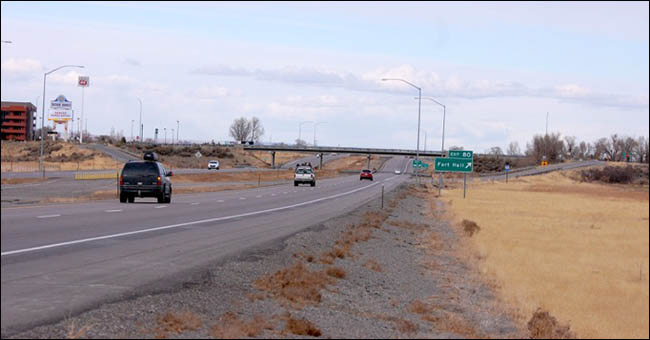
The Fort Hall interchange, at Exit 80 on Interstate 15, was constructed in 1958 and had reached the end of its design life. So, in 2018, the Shoshone-Bannock Tribes and ITD District 5 partnered to ensure the new design would meet the needs of the tribal community, since the interchange was the primary entrance into the Fort Hall Indian Reservation from the freeway in Eastern Idaho.
The partnership was spearheaded by Pete Broncho and High “Brooks” Davis (Shoshone-Bannock Tribes) and Tara Capson (Idaho Transportation Department), and included many other representatives from ITD and the Tribes. Rosemary Curtin of RBCI worked closely with the group to provide public-involvement services.
This unique partnership resulted in a collaborative design process, extensive input from the community, a community-wide artwork contest, and an interchange design that will serve the area for many years to come. It also ensured that the interchange design would connect with the Tribes’ Master Plan. Both the tribes and ITD valued a high level of community involvement for this project. The Shoshone-Bannock Tribes employed their communication channels, media outlets, extensive Facebook audience and website to increase participation, gather valuable input, and ensure public support of the project. Involvement from the Shoshone-Bannock Tribes helped increase the reach and effectiveness of ITD’s public-involvement process, making the project a natural selection for the Excellence in Transportation Award in Communication/Public Participation.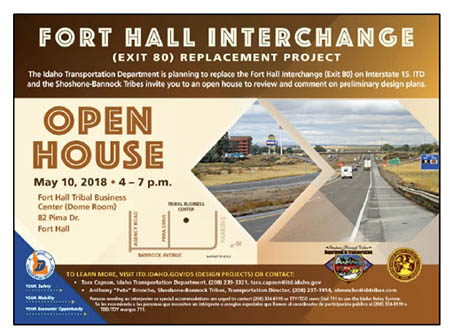
The Shoshone-Bannock Tribes and ITD refined a partnership process that could be used as a model for future infrastructure projects on Native American reservations. The partnership included regular working group meetings between the Tribes and ITD. Meetings were attended by the Tribes’ Transportation Director and Planning Director, the Shoshone-Bannock Department of Transportation, ITD District 5, and RBCI.
RBCI facilitated and summarized the meetings, helped define roles, and ensured that issues, concerns and input were recorded and received adequate follow-up.
The Tribes provided valuable input to ITD throughout the design of the Exit 80 interchange. For example, they shared information about creek flows and land-use plans, and helped facilitate an irrigation agreement. This high level of coordination helped ensure that the new interchange design would connect with local roads and future development, while reflecting the culture of the area.
The Shoshone-Bannock Tribes facilitated a “call to artists” (with assistance from ITD and RBCI) to install aesthetic elements on the interchange that would honor the heritage of the area. Local artists were invited to submit designs for a statue and metal art pieces on the walls under the interchange bridge. The contest received positive feedback in the media and the community, and resulted in a winning artwork submission by a Shoshone-Bannock artist. The aesthetic pieces under the bridge are being covered financially by ITD, while the statue is being covered by the Tribes.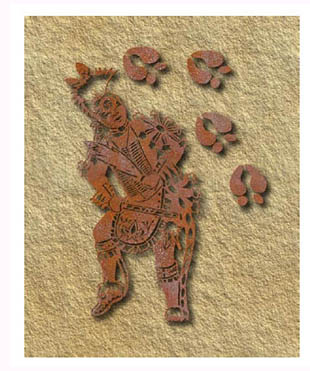
ITD hosted (with help from the Tribes) two community surveys to gather input from their five districts about the interchange design. Because these surveys were hosted by the Tribes, community participation increased and ITD received valuable input for the design of the interchange. For example, the overpass was designed with special attention to truck turning radii, in order to support economic development in the area.
To extend ITD’s notification efforts, the Tribes posted information to their Facebook pages, forwarded notification emails to members of the Tribes, and created a page about the interchange on their website. The Tribes also gave feedback to ITD about the best place to hold public meetings and questions to ask on the community survey.
The Tribes also developed a visual animation of ITD’s preliminary design to help community members picture the new interchange design and potential placement of artistic elements. The design was available on the Tribes’ website, released to local media, and available at a public open house. As a result, public input was detailed and well-informed. Other visual displays included an aerial view of the new interchange (shown at the public meeting and posted online), a project fact sheet, and invitation postcards with a map of the meeting location. The project fact sheet provided project information and a rough timeline. It was distributed on the Tribes’ website, ITD’s website, at public meetings and in person.

Published 01-03-20