
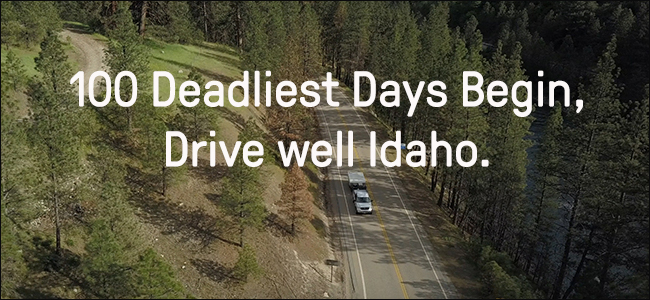
Summer travel season kicks off amid pandemic
It’s hard to believe but Memorial Day Weekend is here, and with it the unofficial beginning of summer. It is the first major travel holiday since the COVID-19 outbreak and the beginning of what is typically the most dangerous time on our roads – the 100 Deadliest Days of Summer.
So what does this mean in a year where there are so many questions about our health, safety, and vacation plans? It’s hard to say. In fact, it has been so hard to forecast what travelers will do this holiday weekend and beyond, that for the first time in 20 years, AAA will not issue a national holiday travel forecast.
What we do know is that businesses and communities throughout Idaho and neighboring states are progressing through various phases of reopening. Gas prices are beginning to tick back up, but are still very low. We also know that many of us have cabin fever and Idaho is full of places to help with that while still being able to socially distance.
We also know that traffic counts have been trending upward as Idaho rebounds and with that rise, we have seen a rise in fatal crashes.
There have been at least 24 fatalities since Governor Brad Little issued his stay-at-home order on March 25. Of those fatalities, one happened during the last week of March, nine in April, and 14 so far this month (through May 20). 
An upward trend in fatalities is always a cause for concer,n but it is especially troubling heading into this particular holiday weekend. The time between Memorial Day Weekend and Labor Day weekend didn’t earn the distinction of the 100 Deadliest Days without cause. Each year during this time we see an uptick in deadly crashes — not just in the Gem State, but across the country. Last year 92 of the 224 people killed in crashes in Idaho lost their lives during this time period.
At the Office of Highway Safety, a lot of our programming focusses on those summer months. We work hand-in-hand with partners throughout the state to address dangerous behaviors like aggressive driving, impaired driving, distracted driving, and not buckling up. We partner with law enforcement, businesses, communities, and the media to promote safe, engaged driving. Perhaps our most important partnership is with everyone who walks, rides, or drives on Idaho roads as we all have a role to play in keeping our communities safe and healthy.
Whether you are planning your weekend getaway or a trip later this summer, here are a few things to keep in mind:
Slow down
Just because we there are fewer cars on the roads, it doesn’t mean you can drive as fast as you want. During the pandemic, law enforcement officers have been clocking drivers at some alarming speeds. More people have been out walking and bicycling and as the summer progresses, and that trend probably won’t change. We are also seeing more cars and speeding only increases your chances of hurting someone or worse in a crash.
Drive Engaged
More cars and more people on the roads require more of our attention. The road is a dynamic place. Whether it’s other drivers, wildlife, or work zones, keeping your hands on the wheel, eyes on the road, and mind on driving gives you a better chance to anticipate and adapt to whatever lies around the next bend. Let’s also keep in mind, Idaho’s hands-free driving bill was signed into law in March, so beginning this summer, drivers can be stopped if they are using a handheld device while driving.
Drive Sober
Summer is a time to celebrate – especially after months of staying home. Let’s just be safe about it. If any of your holiday plans involve any alcohol, plan for a sober ride. Impairment has contributed to more than a third of all fatal crashes in Idaho during the last five years. It’s also important to note that it’s not just alcohol that can impair your ability to drive safely, it can be prescription, over the counter, or even illicit drugs. No matter what it is, if it makes you feel different, the odds are you will drive different. Just plan a safe, sober ride.
Buckle Up
Seat belts save lives. There is no other way to put it. In Idaho between 2014 and 2018, there were 450 people killed in crashes who were not wearing seat belts. Seat belts have an effective rate of nearly 50% – so of those 450 people, 225 of them could have survived had they been wearing a seat belt. That is a lot of people. Wearing a seat belt doesn’t guarantee you will survive a crash, but wearing one greatly increase your odds of making it back to your family. It only takes a few seconds for that piece of mind.
As a community we have all gone through a lot to keep each other safe and healthy during the COVID-19 pandemic. Let’s not let our sacrifices be undone by making unsafe choices on the roads. Whether you’re headed back to the office, planning a holiday getaway, or travelling across the state to reconnect with family or friends – drive well Idaho.
Published 05-22-20